Category: Future Health

  • Drone Delivers TB Test in 5 Days: ICMR Study Shows Major Breakthrough

    Drone Delivers TB Test in 5 Days: ICMR Study Shows Major Breakthrough

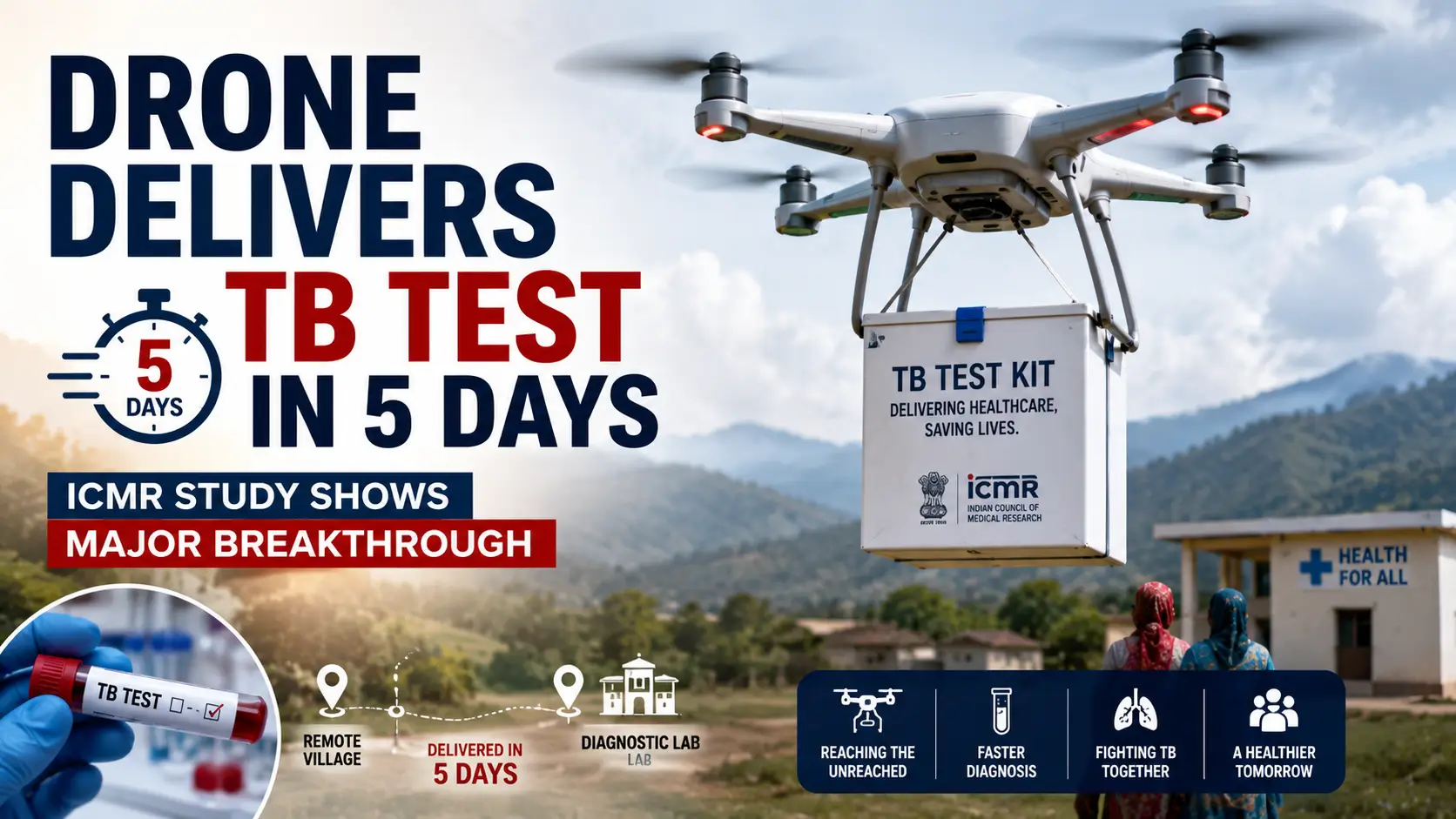
    India’s fight against tuberculosis (TB) has received a major technological boost after a new study by the Indian Council of Medical Research (ICMR) found that drones can dramatically speed up TB diagnosis in remote areas. Under the flagship i-DRONE initiative, researchers demonstrated that transporting sputum samples by drone reduced the median time required for TB diagnosis from 15 days to just 5 days while also significantly lowering patient expenses. (Press Information Bureau)

    The findings highlight how drone technology could help strengthen India’s National TB Elimination Programme (NTEP) by improving access to timely diagnosis for people living in difficult-to-reach regions.

    How the Drone System Works

    Instead of requiring patients to travel long distances to TB testing laboratories, sputum samples are collected at nearby Primary Health Centres (PHCs) and sub-centres. Drones then transport these samples directly to designated tuberculosis diagnostic laboratories.

    This approach allows patients to submit samples closer to their homes while ensuring that laboratories receive specimens much faster than through conventional road transport. As a result, doctors can confirm TB cases earlier and begin treatment sooner. (Press Information Bureau)

    Study Conducted in Telangana

    The programme-based study was carried out in Yadadri-Bhuvanagiri district of Telangana in collaboration with AIIMS Bibinagar and the District TB Office under the National TB Elimination Programme.

    Researchers enrolled 840 participants and compared the traditional diagnostic process with the drone-enabled sample transport system. The results showed that the median turnaround time for TB diagnosis dropped from 15 days to 5 days, enabling much faster clinical decision-making. (Press Information Bureau)

    Huge Reduction in Patient Costs

    Besides reducing diagnosis time, the drone initiative also significantly lowered the financial burden on patients.

    According to the ICMR study:

    • Average out-of-pocket expenditure dropped from around ₹9,451 to approximately ₹91.
    • Many patients incurred no travel-related expenses during the drone-assisted phase.
    • Savings came from reduced transportation costs, lower wage losses, and easier access to nearby sample collection centres. (Press Information Bureau)

    These savings are especially important for rural families, where travelling to diagnostic centres often means losing an entire day’s income.

    Why Faster Diagnosis Matters

    Tuberculosis remains one of India’s biggest public health challenges. Delays in diagnosis allow infected individuals to continue spreading the disease while their condition worsens.

    Earlier diagnosis provides several benefits:

    • Faster initiation of treatment.
    • Reduced disease transmission.
    • Better treatment outcomes.
    • Lower risk of severe illness.
    • Improved chances of completing treatment successfully.

    Health experts say reducing diagnostic delays is a critical step toward achieving India’s goal of eliminating TB.

    Expanding Access in Remote Areas

    Many villages in India are located far from specialised diagnostic laboratories, making healthcare access difficult.

    The i-DRONE initiative created a hub-and-spoke network connecting:

    • 11 Primary Health Centres
    • 60 sub-centres
    • 4 TB diagnostic units

    Patients could provide sputum samples at nearby health facilities instead of travelling long distances, while drones handled rapid transportation to testing centres. This model demonstrates how emerging technologies can improve healthcare delivery in geographically challenging regions. (Press Information Bureau)

    Future of Drone-Based Healthcare

    The success of the TB programme suggests that drones could play a broader role in India’s healthcare system. Beyond transporting TB samples, drone technology is already being explored for delivering medicines, vaccines, blood products, and emergency medical supplies to remote communities.

    As drone networks expand, they could become an important part of India’s digital health infrastructure, helping reduce delays and improving access to life-saving medical services.

    A Promising Step Toward TB Elimination

    The ICMR’s i-DRONE initiative demonstrates how innovative technology can solve real-world healthcare challenges. By cutting TB diagnosis time from 15 days to 5 days and dramatically reducing patient costs, drone-assisted sample transport has shown the potential to transform tuberculosis care in underserved regions.

    If expanded nationwide, this model could help India diagnose TB earlier, begin treatment faster, and move closer to achieving its long-term goal of eliminating tuberculosis as a public health threat. (Press Information Bureau)
  • AI Blood Test Detects Early Cancer: A New Era in Early Diagnosis

    AI Blood Test Detects Early Cancer: A New Era in Early Diagnosis

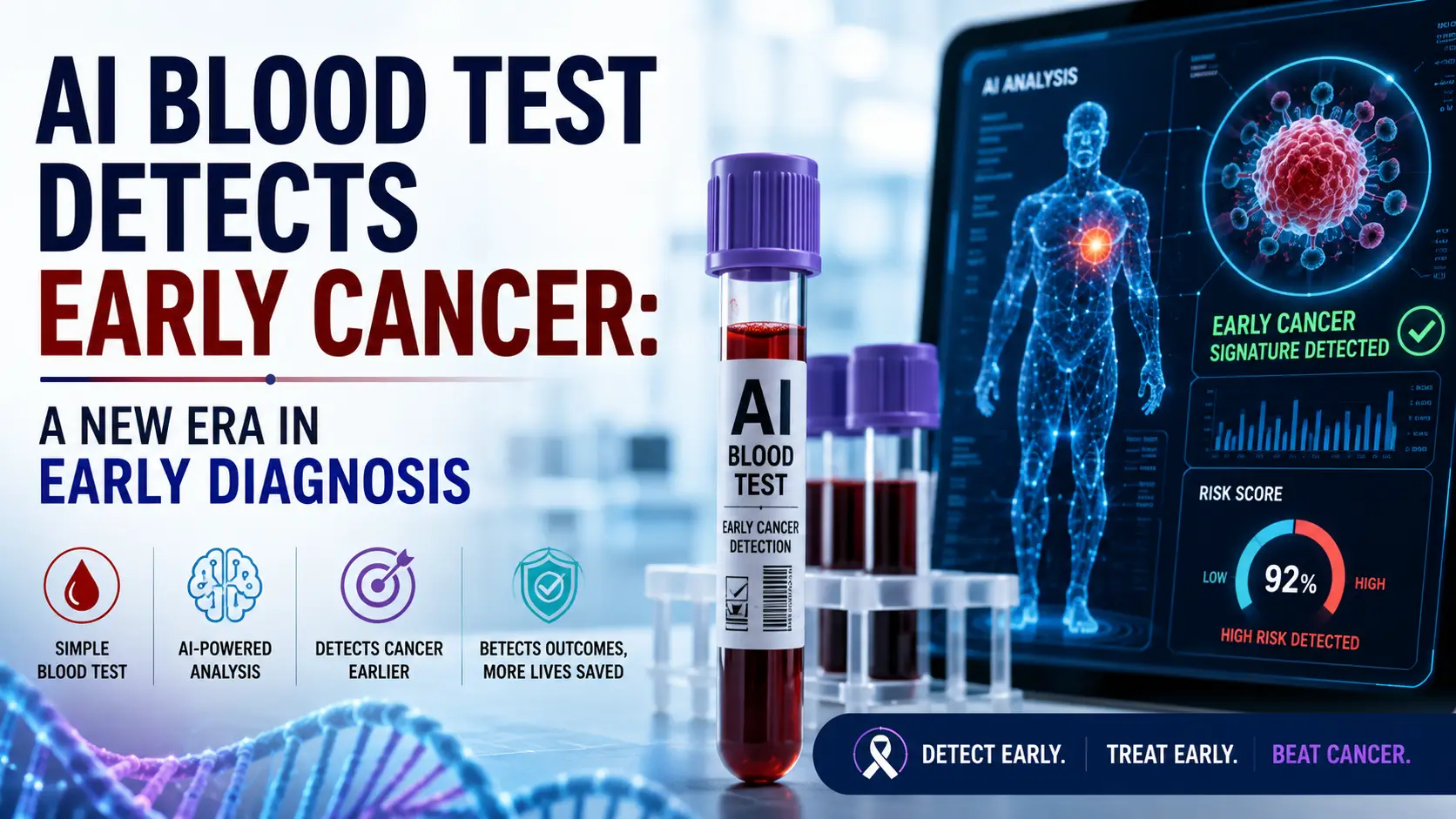
    Artificial intelligence is transforming cancer detection, and one of the most promising breakthroughs is the development of AI-powered blood tests capable of identifying cancer at its earliest stages. These advanced tests analyze tiny fragments of DNA, proteins, and other biomarkers circulating in the bloodstream, allowing doctors to detect signs of cancer before symptoms appear.

    Researchers believe this technology could significantly improve survival rates by enabling earlier diagnosis and faster treatment, potentially changing the future of cancer screening worldwide.

    How the AI Blood Test Works

    Unlike traditional cancer screening methods that often focus on a single organ, AI blood tests examine a simple blood sample for biological signals associated with multiple types of cancer.

    The test combines advanced laboratory techniques with artificial intelligence algorithms that analyze:

    • Cell-free DNA (cfDNA)
    • Circulating tumor DNA (ctDNA)
    • DNA methylation patterns
    • Proteins and other biomarkers
    • Genetic mutations linked to cancer

    The AI system compares these patterns with millions of data points from previous patients to identify abnormalities that may indicate cancer.

    Detecting Cancer Before Symptoms

    One of the biggest advantages of AI-based blood tests is their ability to detect cancer long before symptoms develop.

    Many cancers, including pancreatic, ovarian, liver, lung, and colorectal cancer, often remain unnoticed until they reach advanced stages. Early detection dramatically increases treatment options and improves survival rates.

    Researchers hope AI blood tests will eventually become part of routine health check-ups, helping identify cancers when they are still highly treatable.

    Multiple Cancers From One Sample

    Unlike conventional screening tests, which usually detect only one specific cancer, many AI blood tests are designed to identify dozens of different cancer types simultaneously.

    Current research has focused on detecting cancers such as:

    • Breast cancer
    • Lung cancer
    • Colorectal cancer
    • Liver cancer
    • Pancreatic cancer
    • Ovarian cancer
    • Stomach cancer
    • Prostate cancer

    Some experimental tests can also predict the most likely organ where the cancer originated, helping doctors decide which diagnostic scans should be performed next.

    The Role of Artificial Intelligence

    Artificial intelligence is essential because the biological changes associated with early cancer are often too subtle for traditional analysis.

    Machine learning models are trained using enormous datasets containing blood samples from both healthy individuals and cancer patients. Over time, these algorithms learn to recognize extremely complex molecular patterns that may indicate disease.

    As more clinical data become available, AI systems continue to improve their accuracy and reduce false-positive and false-negative results.

    Benefits Over Traditional Screening

    AI blood tests offer several advantages over conventional screening methods.

    These include:

    • Simple blood sample collection
    • Earlier detection of cancer
    • Ability to detect multiple cancers at once
    • Less invasive than tissue biopsies
    • Faster laboratory analysis
    • Potential for routine population screening

    Because the test requires only a blood sample, it may also improve participation among people who avoid invasive procedures such as colonoscopy or tissue biopsy.

    Current Challenges

    Although the technology is highly promising, experts caution that AI blood tests are still evolving.

    Several challenges remain before they become routine healthcare tools:

    • Large-scale clinical validation
    • Ensuring consistent accuracy across different populations
    • Reducing false-positive results
    • Determining cost-effectiveness
    • Regulatory approvals in different countries

    Doctors also emphasize that a positive blood test does not confirm cancer. Additional imaging tests and biopsies are still required to establish a definitive diagnosis.

    Future of Cancer Screening

    Researchers believe AI blood testing could become one of the biggest advances in cancer detection over the next decade. Instead of waiting for symptoms to appear, healthcare systems may eventually use annual blood screening to identify cancers at their earliest stages.

    Scientists are also exploring whether AI can monitor cancer recurrence after treatment, assess treatment response, and personalize therapies based on molecular changes detected in blood.

    As artificial intelligence continues to evolve, its integration with precision medicine is expected to improve both diagnosis and patient outcomes.

    A Major Step Toward Earlier Detection

    AI-powered blood tests represent a significant breakthrough in modern cancer research. By combining advanced molecular biology with machine learning, these tests offer the possibility of detecting cancer earlier than ever before using only a simple blood sample.

    While more clinical studies and regulatory approvals are still needed, the technology has the potential to transform cancer screening by making early detection faster, less invasive, and more accessible. If successfully implemented on a large scale, AI blood tests could save countless lives through earlier diagnosis and timely treatment, marking a new chapter in the global fight against cancer.