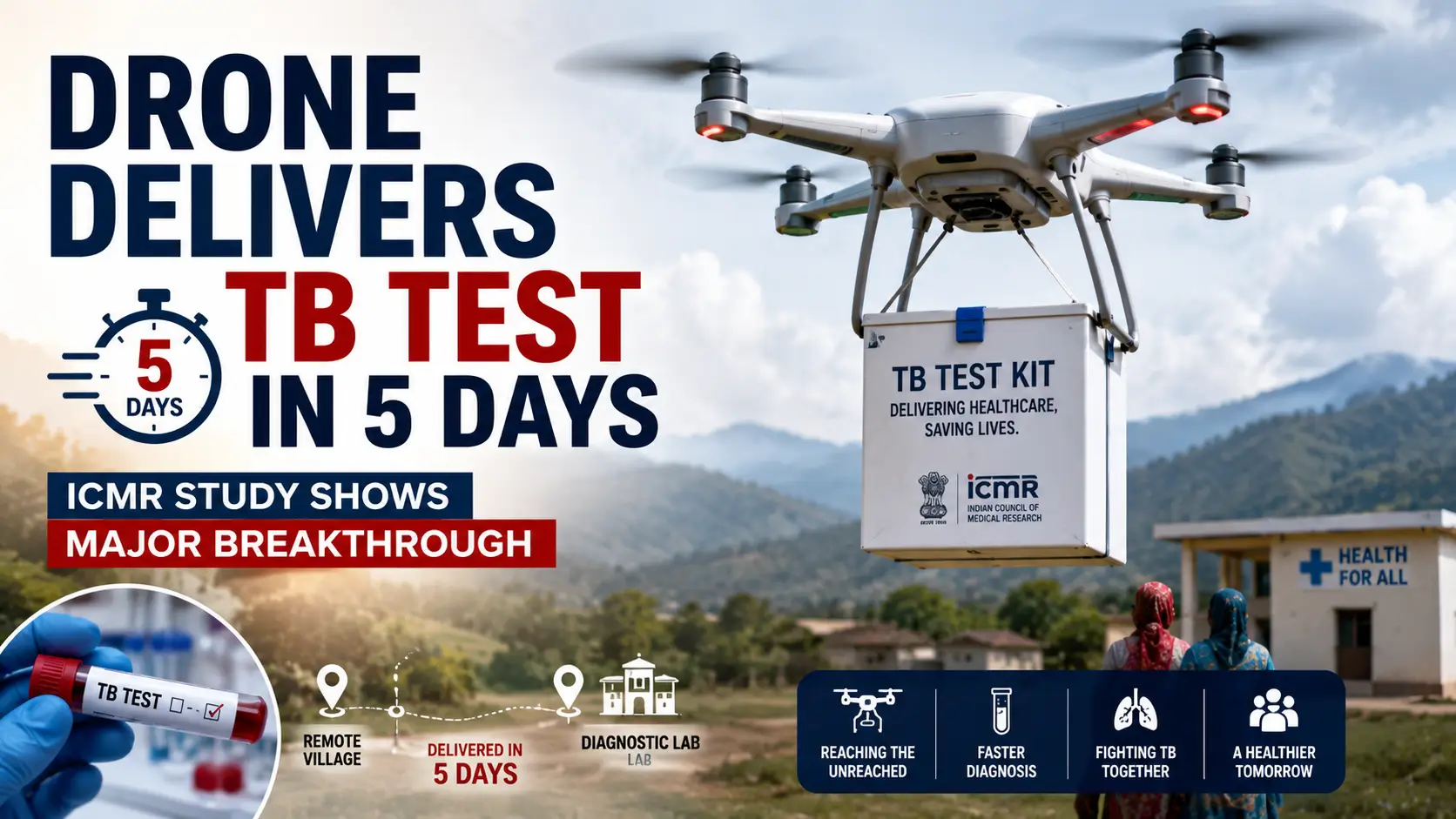
India’s fight against tuberculosis (TB) has received a major technological boost after a new study by the Indian Council of Medical Research (ICMR) found that drones can dramatically speed up TB diagnosis in remote areas. Under the flagship i-DRONE initiative, researchers demonstrated that transporting sputum samples by drone reduced the median time required for TB diagnosis from 15 days to just 5 days while also significantly lowering patient expenses. (Press Information Bureau)
The findings highlight how drone technology could help strengthen India’s National TB Elimination Programme (NTEP) by improving access to timely diagnosis for people living in difficult-to-reach regions.
How the Drone System Works
Instead of requiring patients to travel long distances to TB testing laboratories, sputum samples are collected at nearby Primary Health Centres (PHCs) and sub-centres. Drones then transport these samples directly to designated tuberculosis diagnostic laboratories.
This approach allows patients to submit samples closer to their homes while ensuring that laboratories receive specimens much faster than through conventional road transport. As a result, doctors can confirm TB cases earlier and begin treatment sooner. (Press Information Bureau)
Study Conducted in Telangana
The programme-based study was carried out in Yadadri-Bhuvanagiri district of Telangana in collaboration with AIIMS Bibinagar and the District TB Office under the National TB Elimination Programme.
Researchers enrolled 840 participants and compared the traditional diagnostic process with the drone-enabled sample transport system. The results showed that the median turnaround time for TB diagnosis dropped from 15 days to 5 days, enabling much faster clinical decision-making. (Press Information Bureau)
Huge Reduction in Patient Costs
Besides reducing diagnosis time, the drone initiative also significantly lowered the financial burden on patients.
According to the ICMR study:
- Average out-of-pocket expenditure dropped from around ₹9,451 to approximately ₹91.
- Many patients incurred no travel-related expenses during the drone-assisted phase.
- Savings came from reduced transportation costs, lower wage losses, and easier access to nearby sample collection centres. (Press Information Bureau)
These savings are especially important for rural families, where travelling to diagnostic centres often means losing an entire day’s income.
Why Faster Diagnosis Matters
Tuberculosis remains one of India’s biggest public health challenges. Delays in diagnosis allow infected individuals to continue spreading the disease while their condition worsens.
Earlier diagnosis provides several benefits:
- Faster initiation of treatment.
- Reduced disease transmission.
- Better treatment outcomes.
- Lower risk of severe illness.
- Improved chances of completing treatment successfully.
Health experts say reducing diagnostic delays is a critical step toward achieving India’s goal of eliminating TB.
Expanding Access in Remote Areas
Many villages in India are located far from specialised diagnostic laboratories, making healthcare access difficult.
The i-DRONE initiative created a hub-and-spoke network connecting:
- 11 Primary Health Centres
- 60 sub-centres
- 4 TB diagnostic units
Patients could provide sputum samples at nearby health facilities instead of travelling long distances, while drones handled rapid transportation to testing centres. This model demonstrates how emerging technologies can improve healthcare delivery in geographically challenging regions. (Press Information Bureau)
Future of Drone-Based Healthcare
The success of the TB programme suggests that drones could play a broader role in India’s healthcare system. Beyond transporting TB samples, drone technology is already being explored for delivering medicines, vaccines, blood products, and emergency medical supplies to remote communities.
As drone networks expand, they could become an important part of India’s digital health infrastructure, helping reduce delays and improving access to life-saving medical services.
A Promising Step Toward TB Elimination
The ICMR’s i-DRONE initiative demonstrates how innovative technology can solve real-world healthcare challenges. By cutting TB diagnosis time from 15 days to 5 days and dramatically reducing patient costs, drone-assisted sample transport has shown the potential to transform tuberculosis care in underserved regions.
If expanded nationwide, this model could help India diagnose TB earlier, begin treatment faster, and move closer to achieving its long-term goal of eliminating tuberculosis as a public health threat. (Press Information Bureau)
Leave a Reply