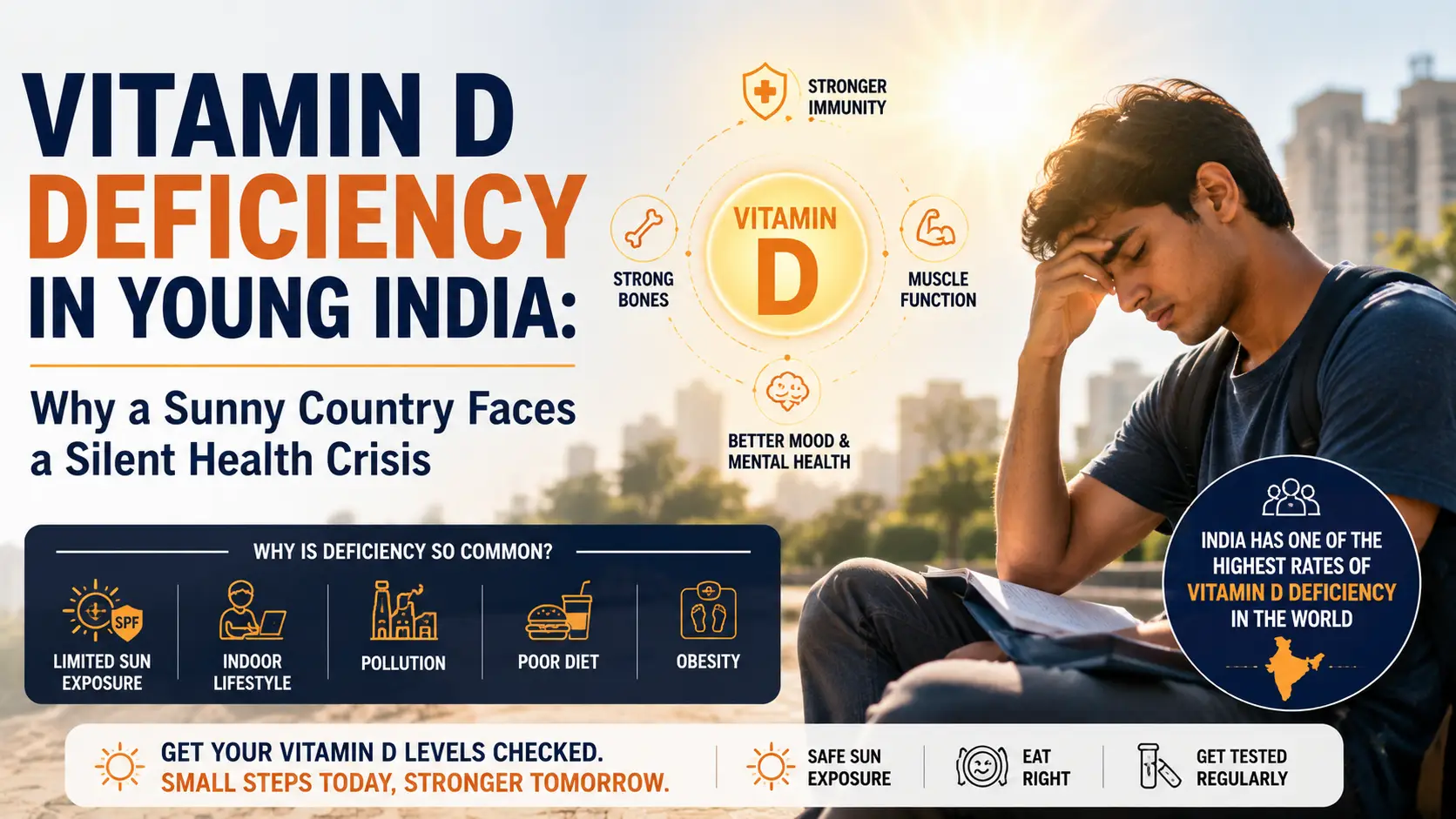
Despite receiving abundant sunshine throughout the year, India is witnessing a growing epidemic of vitamin D deficiency, especially among teenagers and young adults. Health experts say modern lifestyles, prolonged indoor work, excessive screen time, air pollution, and poor dietary habits have created a paradox where millions of young Indians are deficient in the “sunshine vitamin.”
Recent medical experts, including endocrinologists from AIIMS Delhi, have warned that vitamin D deficiency is becoming increasingly common even among otherwise healthy young people. The condition often goes unnoticed because its symptoms are subtle and can easily be mistaken for stress or fatigue. (The Times of India)
Why Young Indians Are at Risk
Vitamin D is produced naturally when the skin is exposed to ultraviolet B (UVB) rays from sunlight. However, today’s lifestyle has dramatically reduced daily sun exposure.
Many young people spend most of their day:
- Working in offices.
- Attending online classes.
- Studying indoors.
- Using computers and smartphones.
- Travelling in enclosed vehicles.
Even when outdoors, sunscreen use, pollution, and clothing that covers most of the body can reduce vitamin D production. People with darker skin also require longer sun exposure because higher melanin levels naturally reduce UVB absorption. (The Times of India)
Common Symptoms Often Ignored
Vitamin D deficiency usually develops gradually, making it difficult to recognize in its early stages.
Some of the most common symptoms include:
- Constant tiredness.
- Muscle weakness.
- Bone or back pain.
- Joint discomfort.
- Frequent infections.
- Low mood.
- Poor concentration.
In severe cases, prolonged deficiency may weaken bones and increase the risk of fractures or osteoporosis later in life. Doctors note that many young patients seek treatment only after symptoms begin affecting their daily activities. (The Times of India)
More Than Just Bone Health
Although vitamin D is widely known for supporting calcium absorption and maintaining strong bones, its role extends far beyond the skeletal system.
Research suggests vitamin D contributes to:
- Healthy muscle function.
- Immune system regulation.
- Normal nerve function.
- Bone development.
- Overall physical well-being.
Scientists continue to study its relationship with other health conditions, but maintaining adequate vitamin D levels remains an important part of overall health. (Wikipedia)
Why Sunshine Alone Is Not Enough
Many people assume that living in a tropical country automatically prevents vitamin D deficiency. However, experts say that simply having sunlight available is not sufficient.
Several factors limit natural vitamin D production, including:
- Indoor lifestyles.
- Air pollution blocking UVB rays.
- Spending peak daylight hours inside.
- Limited outdoor physical activity.
- Higher skin pigmentation.
Doctors recommend regular outdoor activity rather than relying solely on dietary supplements. Moderate sunlight exposure during appropriate daytime hours remains one of the most effective natural sources of vitamin D. (The Times of India)
Foods That Support Vitamin D Levels
Although food alone usually cannot provide enough vitamin D, certain foods can help improve overall intake.
These include:
- Fatty fish such as salmon and mackerel.
- Egg yolks.
- Fortified milk.
- Fortified cereals.
- Fortified dairy products.
- Mushrooms exposed to UV light.
For individuals with confirmed deficiency, doctors may recommend vitamin D supplements after appropriate blood testing. Self-medication with high-dose supplements should be avoided because excessive vitamin D intake can be harmful. (The Times of India)
Importance of Early Testing
Because symptoms are often vague, many people remain unaware they have low vitamin D levels. A simple blood test measuring serum 25-hydroxyvitamin D can help diagnose deficiency.
Healthcare professionals generally advise testing for people who experience persistent fatigue, unexplained muscle pain, recurrent bone discomfort, or who have limited sun exposure due to their lifestyle or occupation. (Wikipedia)
Building Healthier Habits
Preventing vitamin D deficiency requires a combination of healthy lifestyle choices rather than supplements alone. Experts recommend spending regular time outdoors, maintaining a balanced diet, staying physically active, and seeking medical advice if symptoms persist.
As urban lifestyles continue to evolve, awareness about vitamin D has become increasingly important. Addressing this silent nutritional deficiency early can help protect bone health, improve physical well-being, and support a healthier future for India’s younger population. (The Times of India)
Leave a Reply