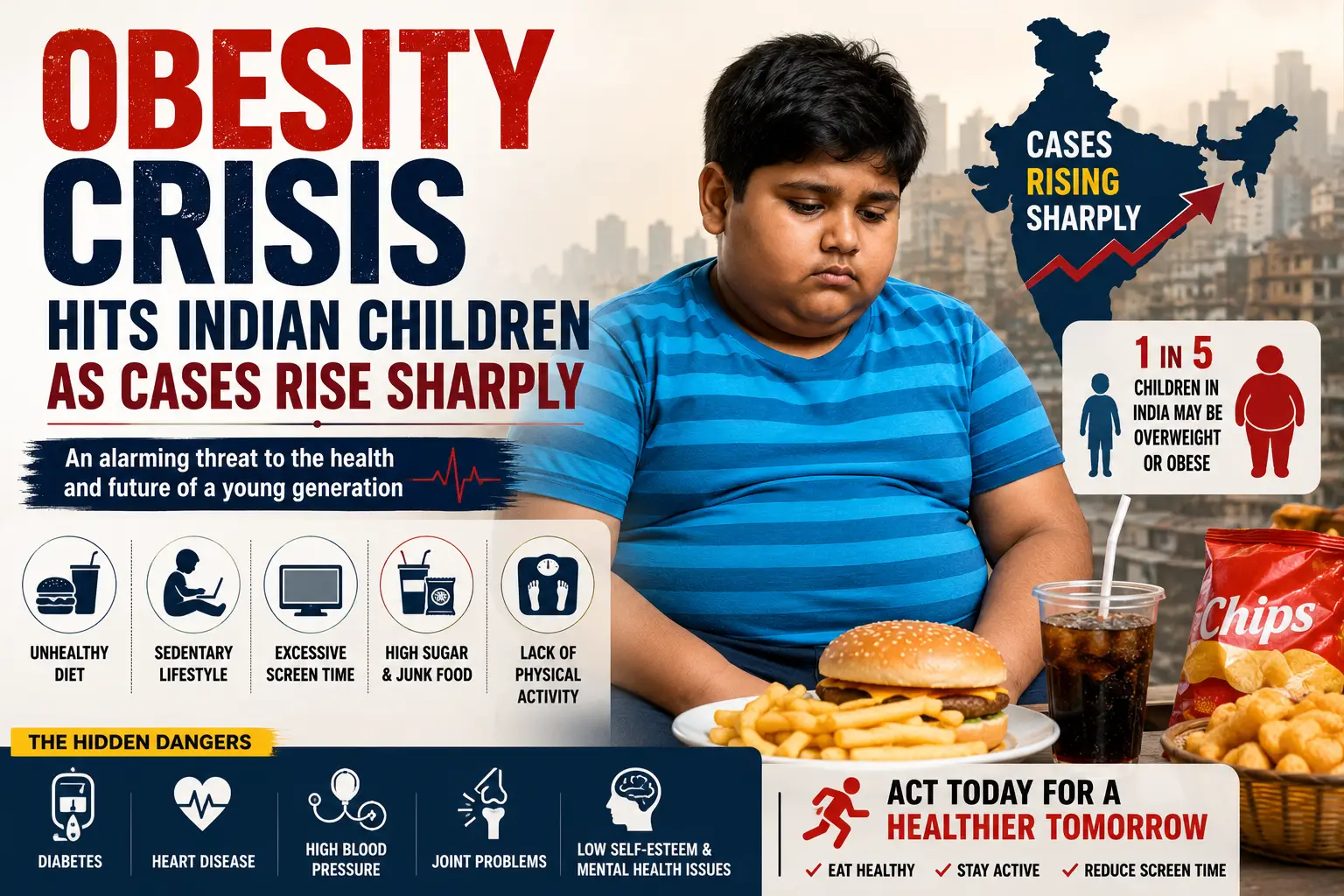
India is facing a growing childhood obesity crisis, with new data showing that millions of children are now overweight or living with obesity. According to the World Obesity Atlas 2026, nearly 4.1 crore (41 million) Indian children are overweight or obese, placing the country among the world’s most affected nations. In response, the Indian Council of Medical Research (ICMR) has released a policy roadmap calling for stronger action to improve children’s diets and create healthier food environments. (The Times of India)
Health experts warn that if the trend continues, India could see a sharp increase in childhood diabetes, high blood pressure, heart disease, and other non-communicable diseases at much younger ages.
Alarming Rise in Childhood Obesity
The latest estimates indicate that childhood obesity is no longer limited to large cities or affluent families. Changing lifestyles, increased consumption of processed foods, and reduced physical activity have contributed to rising obesity rates across urban and rural India.
The World Obesity Atlas 2026 estimates that around 41 million Indian children and adolescents are currently overweight or obese. This growing burden has prompted policymakers to consider stronger public health measures aimed at protecting children’s health. (The Times of India)
What’s Driving the Crisis
Doctors say several lifestyle changes are fueling the obesity epidemic among children.
Major contributing factors include:
- Frequent consumption of junk food and sugary drinks.
- Increased screen time on smartphones, tablets, and televisions.
- Reduced outdoor play and physical activity.
- Easy access to ultra-processed foods.
- Aggressive marketing of unhealthy foods to children.
Many children also spend long hours studying indoors or attending coaching classes, leaving less time for exercise and recreational sports.
Health Risks Begin Early
Childhood obesity affects much more than body weight. Excess weight during childhood can increase the risk of developing serious health conditions later in life.
These include:
- Type 2 diabetes.
- High blood pressure.
- Fatty liver disease.
- High cholesterol.
- Sleep disorders.
- Joint and bone problems.
- Mental health issues such as anxiety and low self-esteem.
Children with obesity are also more likely to remain obese as adults, increasing their lifetime risk of cardiovascular disease.
ICMR Recommends Stronger Policies
To address the growing problem, the ICMR-National Institute of Nutrition (ICMR-NIN) has proposed several policy measures to promote healthier eating habits among children.
Key recommendations include:
- Making unhealthy junk food more expensive through taxation.
- Introducing clearer front-of-pack nutrition labels.
- Restricting advertising of unhealthy foods aimed at children.
- Strengthening nutrition standards in school canteens.
- Creating healthier food environments in schools and communities.
The recommendations are part of a broader strategy to encourage healthier diets and reduce obesity-related diseases among children and adolescents. (The Economic Times)
Parents Play a Key Role
Health experts emphasise that families can make a significant difference by encouraging healthier daily habits.
Simple steps include:
- Serving balanced home-cooked meals.
- Limiting sugary beverages and packaged snacks.
- Encouraging at least one hour of physical activity each day.
- Reducing recreational screen time.
- Promoting adequate sleep and regular meal timings.
Schools can also contribute by providing nutritious meals, encouraging sports participation, and promoting health education.
Building a Healthier Future
The rising number of overweight and obese children highlights an urgent public health challenge for India. While improved awareness and healthier lifestyle choices remain essential, experts say long-term success will also depend on stronger government policies, responsible food marketing, and supportive school environments.
With nearly 4.1 crore children already affected, early intervention is critical. By combining healthier diets, increased physical activity, and evidence-based public health measures, India has an opportunity to slow the obesity epidemic and protect the health of future generations. (The Times of India)