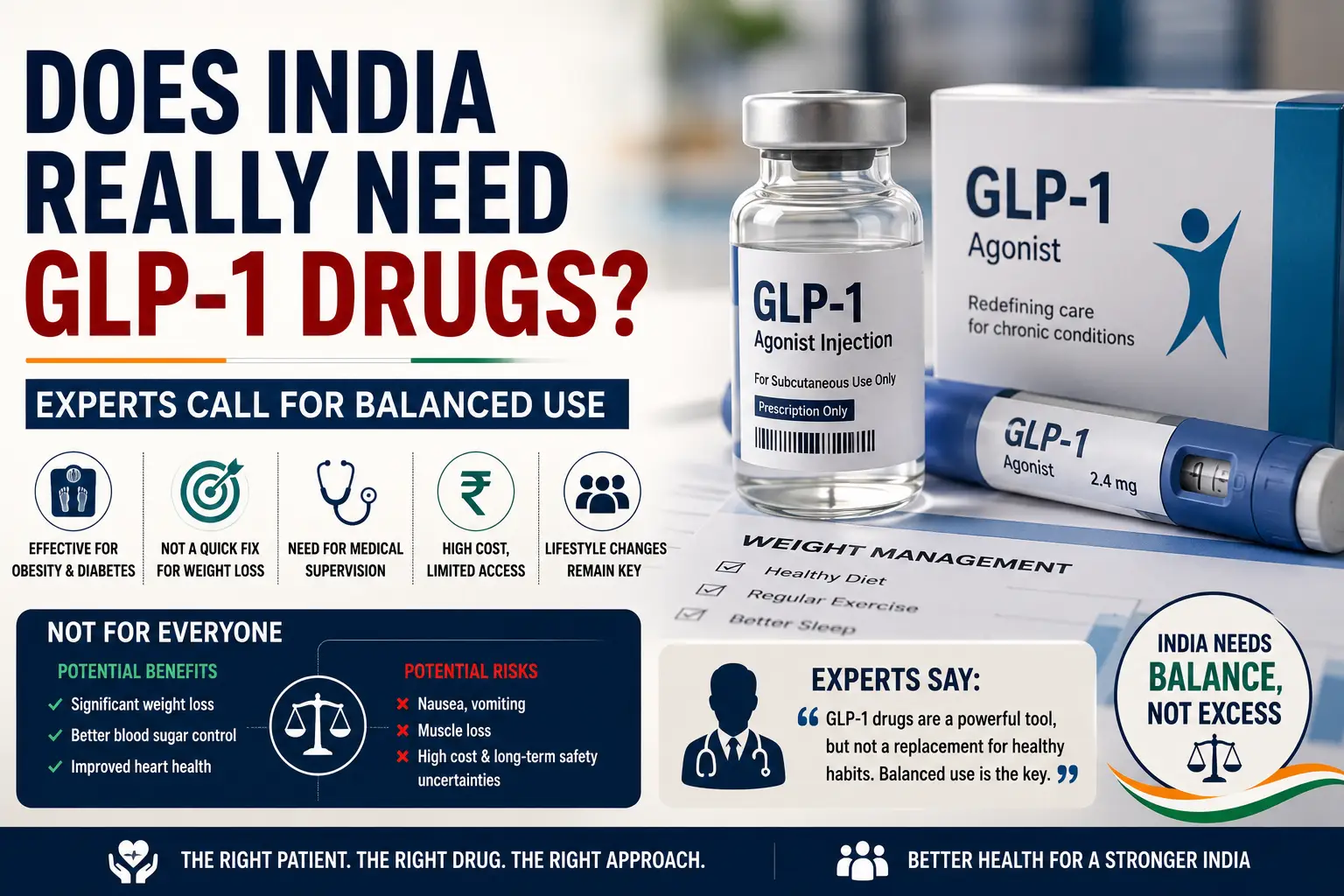
The arrival of GLP-1 weight-loss drugs such as semaglutide and tirzepatide has transformed obesity treatment worldwide, and India is no exception. These medicines can help people lose significant weight while improving blood sugar control and reducing the risk of obesity-related diseases. However, as their popularity grows, doctors and public health experts are asking an important question: Does India really need GLP-1 drugs, or should prevention remain the priority?
Medical experts say the answer is not a simple yes or no. While GLP-1 medications can be life-changing for selected patients with obesity or type 2 diabetes, they are not intended to replace healthy eating, regular exercise, or broader public health measures. (The Indian Express)
What Are GLP-1 Drugs?
GLP-1 receptor agonists are medicines originally developed to treat type 2 diabetes. They work by mimicking a natural hormone that helps regulate blood sugar, slows stomach emptying, and increases feelings of fullness.
Popular GLP-1 medicines include:
- Semaglutide
- Tirzepatide
Clinical studies have shown these medications can help many patients lose 15–20% of their body weight when combined with lifestyle changes. They have also demonstrated benefits in improving blood sugar control and reducing the risk of cardiovascular disease in appropriate patients. (The Indian Express)
India’s Obesity Challenge
India is experiencing a rapid rise in obesity among both adults and children. According to recent estimates, millions of Indians are now overweight or obese, increasing their risk of diabetes, heart disease, fatty liver disease, and hypertension.
The problem is particularly concerning because many Indians develop metabolic diseases at lower body mass index (BMI) levels than Western populations. This means even moderate weight gain can significantly increase health risks. (The Times of India)
Who Actually Needs These Medicines?
Doctors emphasise that GLP-1 drugs are not meant for people who simply want to lose a few kilograms for cosmetic reasons.
They are generally recommended for:
- Adults with obesity.
- People with obesity-related medical conditions.
- Patients with type 2 diabetes who may benefit from additional weight loss.
- Individuals who have not achieved adequate results through diet and exercise alone.
Treatment decisions should always be made by qualified medical specialists after evaluating a patient’s overall health. (Press Information Bureau)
Benefits Beyond Weight Loss
The appeal of GLP-1 drugs extends beyond reducing body weight.
Research suggests these medicines may also:
- Improve blood sugar control.
- Lower blood pressure.
- Reduce visceral fat.
- Improve insulin sensitivity.
- Reduce the risk of heart attacks and strokes in eligible patients.
These broader metabolic benefits have made GLP-1 drugs one of the biggest advances in obesity medicine over the past decade. (Marie Claire UK)
Challenges and Safety Concerns
Despite their effectiveness, GLP-1 drugs are not suitable for everyone.
Common side effects include:
- Nausea.
- Vomiting.
- Diarrhoea.
- Constipation.
- Loss of appetite.
More serious but less common risks include pancreatitis, kidney injury, bowel obstruction, and other complications. Rapid weight loss may also contribute to muscle loss if patients do not maintain adequate nutrition and physical activity. Some regulators have also highlighted rare safety concerns that continue to be monitored. (Press Information Bureau)
India Strengthens Oversight
With increasing demand for weight-loss medicines, Indian health authorities have tightened regulatory oversight.
The Drug Controller General of India (DCGI) has instructed manufacturers to stop misleading advertisements and has intensified inspections of pharmacies, online sellers, wholesalers, and weight-loss clinics to prevent unauthorised sales and inappropriate prescribing.
Officials have stressed that GLP-1 medicines should only be dispensed on a valid prescription and under medical supervision. (Press Information Bureau)
Prevention Must Remain the Priority
Many public health experts believe that while GLP-1 drugs are valuable for selected patients, they cannot solve India’s obesity epidemic on their own.
Long-term progress will still depend on:
- Healthier diets.
- Regular physical activity.
- Better nutrition education.
- Reduced consumption of ultra-processed foods.
- Strong public health programmes.
Experts caution that relying too heavily on expensive medicines could divert attention from preventive strategies that benefit the wider population. (The Indian Express)
A Balanced Path Forward
GLP-1 drugs represent an important breakthrough in treating obesity and type 2 diabetes, offering meaningful health benefits for people who genuinely need them. However, experts agree they should be viewed as one part of a comprehensive treatment plan rather than a quick solution for weight loss.
For India, where obesity and diabetes are rising rapidly alongside persistent nutritional challenges, the most effective strategy is likely to combine responsible use of GLP-1 medicines with stronger prevention programmes, healthier lifestyles, and careful medical supervision. This balanced approach can help maximise patient benefits while ensuring that obesity is addressed as both a medical condition and a broader public health challenge. (The Indian Express)
Leave a Reply