Living with a rare disease can be challenging, and finding the right doctor is often one of the biggest hurdles. Because rare diseases affect relatively small numbers of people, many general practitioners may have limited experience diagnosing or treating them. Patients frequently visit multiple healthcare providers before receiving an accurate diagnosis, leading to delays in treatment and increased emotional stress.
Fortunately, advances in medical research, digital health platforms, and specialised referral networks are making it easier for patients to connect with experts. Knowing where to look and how to prepare can significantly improve your chances of finding the right specialist.
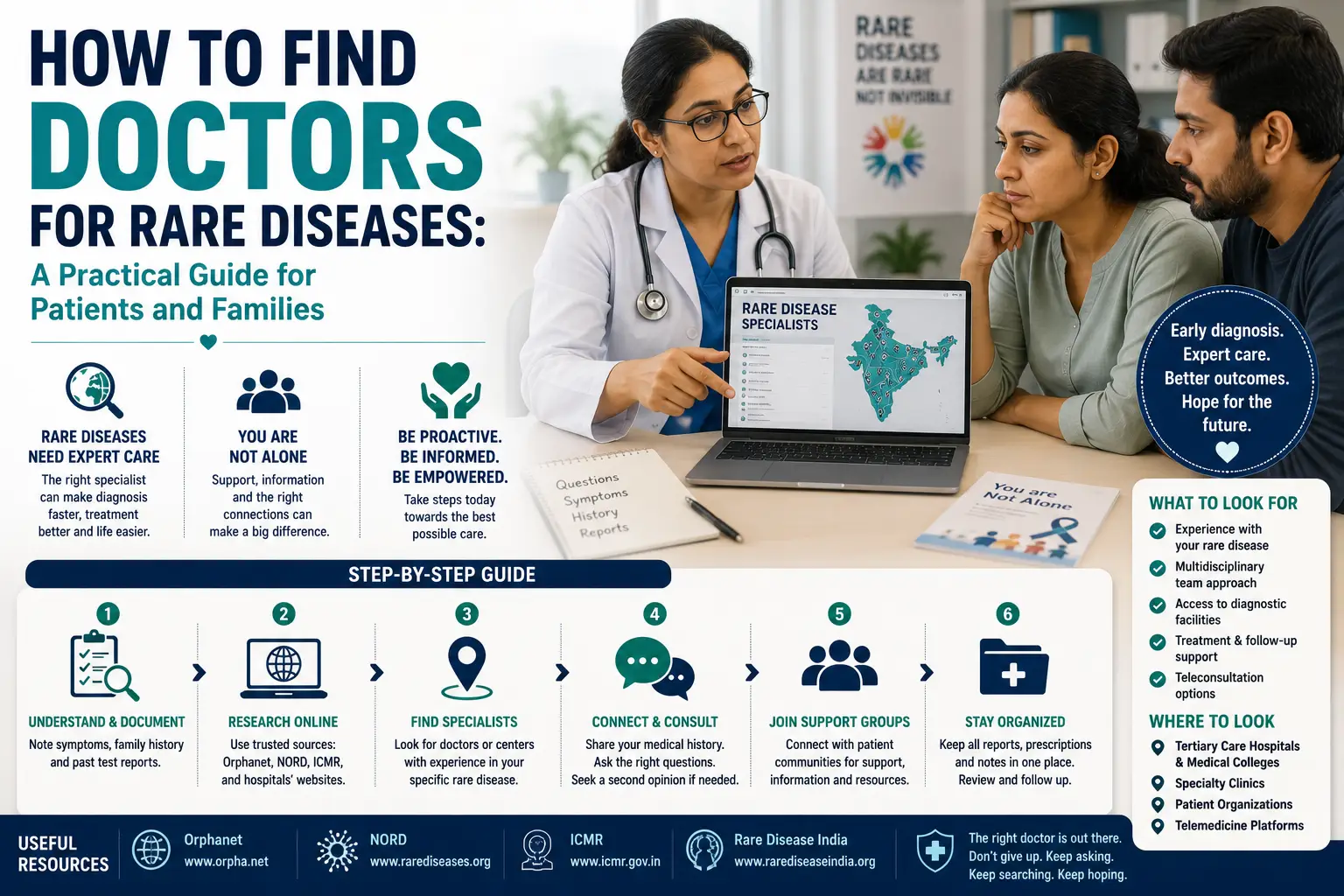
Start With Your Family Doctor
Your family physician or primary care doctor should be your first point of contact. They can evaluate your symptoms, order initial tests, and refer you to the appropriate specialist.
A detailed referral letter containing your medical history, laboratory reports, imaging results, and previous treatments can help specialists understand your condition more quickly and avoid unnecessary repeat testing.
Visit Specialised Medical Centres
Many rare diseases are managed at tertiary care hospitals and academic medical centres where multidisciplinary teams work together.
These centres often include experts in:
- Genetics
- Neurology
- Immunology
- Endocrinology
- Oncology
- Metabolic disorders
- Paediatric medicine
Large teaching hospitals are also more likely to participate in research studies and clinical trials for rare diseases.
Use Official Rare Disease Networks
Many countries have established rare disease registries and referral networks that help patients locate experienced clinicians.
These organisations often provide:
- Lists of specialist hospitals.
- Expert physician directories.
- Patient support services.
- Information about ongoing research.
- Clinical trial opportunities.
Government health departments and recognised rare disease organisations are generally the most reliable sources of this information.
Consider Genetic Evaluation
Thousands of rare diseases have a genetic cause. If your doctor suspects a hereditary condition, they may recommend consultation with a clinical geneticist or genetic counsellor.
Modern genetic testing, including next-generation sequencing, can identify disease-causing mutations that were difficult to detect just a few years ago. An accurate genetic diagnosis can help guide treatment decisions and provide important information for family members.
Gather Your Medical Records
Before visiting a specialist, organise all relevant medical documents in one place.
Important records include:
- Previous consultation notes.
- Blood test reports.
- Imaging scans.
- Biopsy results.
- Medication history.
- Family medical history.
- Symptom timeline.
Having complete records helps specialists make faster and more informed decisions.
Seek a Second Opinion
Rare diseases are often difficult to diagnose, and symptoms may overlap with more common conditions. If your diagnosis remains uncertain or your symptoms continue despite treatment, seeking a second opinion from another specialist can be valuable.
Many leading hospitals now offer virtual consultations, allowing patients to obtain expert opinions without travelling long distances.
Join Patient Support Groups
Patient organisations can provide practical advice that extends beyond medical treatment.
Support groups often help patients:
- Find experienced specialists.
- Learn about new therapies.
- Connect with families facing similar conditions.
- Access educational resources.
- Understand available financial assistance.
While patient experiences can be helpful, medical decisions should always be made in consultation with qualified healthcare professionals.
Ask the Right Questions
During your appointment, consider asking questions such as:
- How much experience do you have treating this condition?
- What additional tests are needed?
- Are there any specialised treatment centres?
- What treatment options are available?
- Should I consider genetic testing?
- Are there clinical trials that may be appropriate?
Taking written notes or bringing a family member can help you remember important information discussed during the consultation.
Don’t Ignore Research Opportunities
Many rare diseases have limited treatment options, but clinical research continues to advance rapidly.
Patients who meet eligibility criteria may have opportunities to participate in clinical trials evaluating new medicines, gene therapies, or innovative treatment approaches. Your specialist can advise whether research participation is appropriate for your condition.
A Team Approach Makes the Difference
Managing a rare disease often requires care from multiple healthcare professionals rather than a single doctor. Depending on the condition, your care team may include specialists, nurses, physiotherapists, nutritionists, psychologists, genetic counsellors, and rehabilitation experts.
Although finding the right specialist can take time, early referral, organised medical records, and access to recognised expert centres can greatly improve the chances of receiving an accurate diagnosis and appropriate treatment. With growing awareness, expanding genetic testing, and stronger rare disease networks, patients today have more resources than ever to navigate the complex journey of rare disease care.