Category: Health News

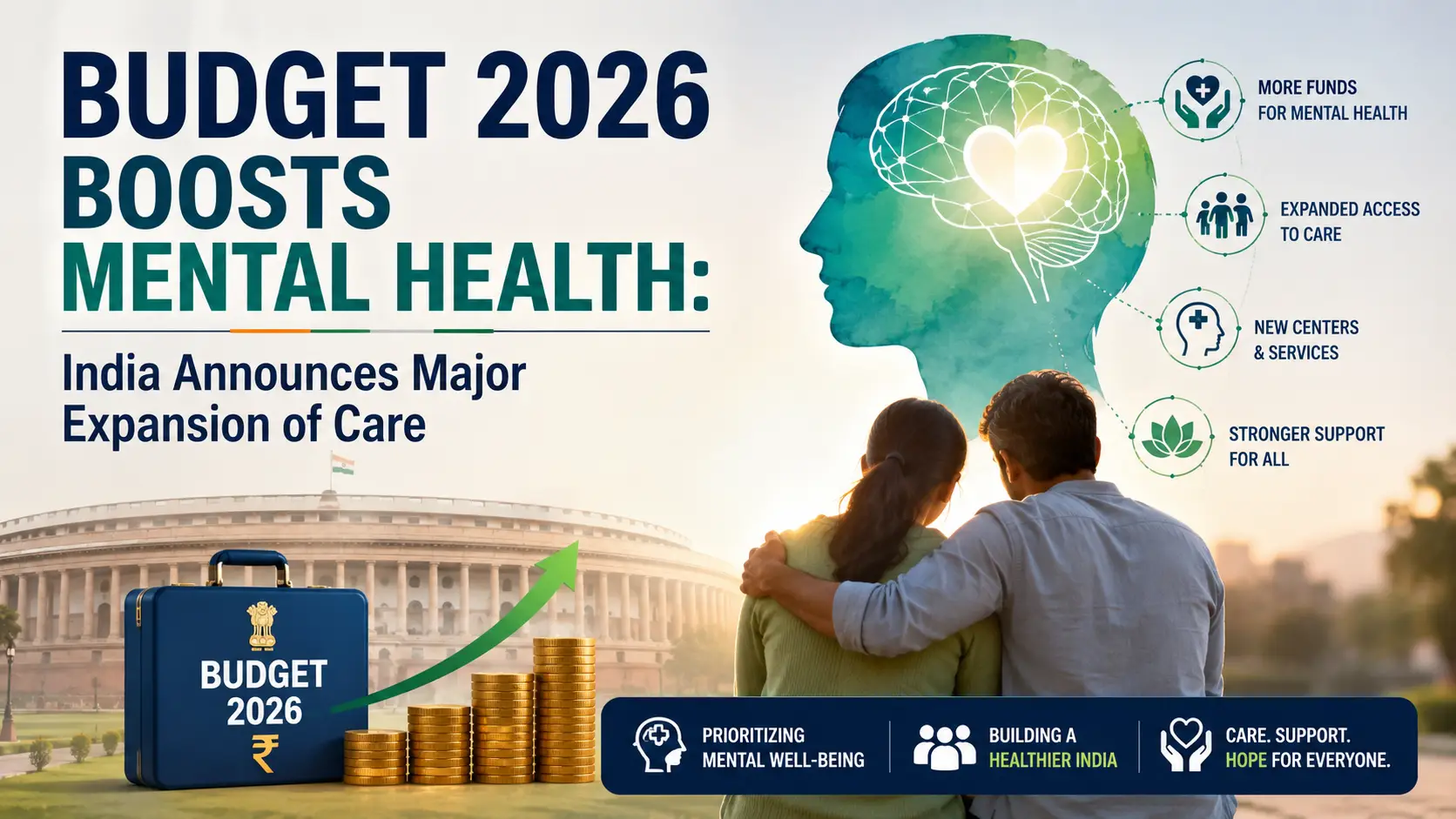
  • Budget 2026 Boosts Mental Health: India Announces Major Expansion of Care

    Budget 2026 Boosts Mental Health: India Announces Major Expansion of Care

    Mental health emerged as one of the standout healthcare priorities in the Union Budget 2026-27, with the Government of India announcing a significant expansion of mental healthcare infrastructure. The budget introduces new institutions, upgrades existing facilities, and aims to improve access to quality psychiatric care, particularly in underserved regions of the country.

    The announcement reflects growing recognition that mental health is an essential component of public healthcare. Rising cases of anxiety, depression, stress-related disorders, substance abuse, and suicide have highlighted the urgent need for stronger mental health services. Through Budget 2026, the government seeks to bridge longstanding gaps in infrastructure and specialist care while making mental health services more accessible for millions of Indians. (Press Information Bureau)

    Mental Health Takes Centre Stage

    For the first time, mental healthcare received dedicated attention as a major healthcare priority during the Union Budget presentation. Finance Minister Nirmala Sitharaman announced plans to strengthen India’s mental health ecosystem by expanding national institutions and improving regional access to specialised treatment.

    A key announcement is the establishment of NIMHANS 2.0, a new national-level mental healthcare institute in North India. The government also announced the upgradation of the National Mental Health Institutes in Ranchi and Tezpur into regional apex centres to improve access to advanced psychiatric care outside southern India. (Press Information Bureau)

    Why the Expansion Is Important

    Mental health experts have long pointed out that India faces a severe shortage of psychiatrists, psychologists, psychiatric nurses, and mental health facilities. Large sections of the population, particularly in rural and semi-urban areas, have limited access to specialised treatment.

    Until now, the National Institute of Mental Health and Neurosciences (NIMHANS) in Bengaluru has served as India’s premier mental healthcare institution. However, patients from northern and eastern states often travel long distances to receive advanced treatment.

    The new institutions announced in Budget 2026 are expected to reduce regional disparities by bringing specialised services closer to millions of people. (Wikipedia)

    Improving Healthcare Infrastructure

    The Budget focuses on strengthening mental healthcare infrastructure rather than only increasing financial allocations. The proposed expansion includes:

    • Establishment of NIMHANS 2.0 in North India.
    • Upgrading Ranchi and Tezpur mental health institutes into regional centres of excellence.
    • Expansion of emergency and trauma care facilities linked with district hospitals.
    • Improved training capacity for psychiatrists and mental health professionals.
    • Better access to specialised diagnosis and treatment services across multiple regions. (Press Information Bureau)

    Health experts believe these measures can help reduce waiting times, improve treatment quality, and expand specialist availability across the country.

    Addressing India’s Mental Health Burden

    India continues to face a significant mental health burden, with millions of people living with depression, anxiety disorders, bipolar disorder, schizophrenia, and substance-use disorders. Despite growing awareness, treatment gaps remain high because of stigma, lack of awareness, and limited healthcare infrastructure.

    Many patients delay seeking medical help due to fear of discrimination or because specialised services are unavailable in their district. The Budget’s emphasis on expanding institutional capacity aims to improve both accessibility and quality of care.

    The government’s approach also supports long-term research, professional training, and community outreach programmes designed to encourage early diagnosis and timely treatment. (Press Information Bureau)

    More Than Just Hospitals

    Experts say expanding hospitals alone will not solve India’s mental health challenges. Public awareness, school counselling, workplace wellness programmes, tele-mental health services, and community-based interventions will remain equally important.

    Digital mental healthcare initiatives, counselling helplines, and integration of mental health services into primary healthcare are expected to complement the new institutional infrastructure over the coming years. Combined with improved training for healthcare workers, these measures could significantly strengthen India’s overall mental healthcare system. (Press Information Bureau)

    Challenges That Still Remain

    While the Budget announcements have been widely welcomed, experts caution that infrastructure expansion must be supported by adequate staffing, funding, and implementation. Several states continue to experience shortages of psychiatrists, clinical psychologists, psychiatric social workers, medicines, and specialised equipment.

    Recent audit findings in some states have highlighted persistent gaps in public mental healthcare, reinforcing the need for sustained investment beyond infrastructure alone. (The Times of India)

    A Positive Step Forward

    The Union Budget 2026 marks an important shift in India’s approach to mental healthcare by recognising mental well-being as a national healthcare priority. The creation of new institutions, regional expansion of specialist services, and investment in healthcare infrastructure demonstrate a stronger commitment to addressing one of the country’s most pressing public health challenges.

    Although improving mental health outcomes will require continued investment, trained professionals, and greater public awareness, the Budget lays a stronger foundation for expanding access to quality psychiatric care. If implemented effectively, these initiatives could help millions of Indians receive earlier diagnosis, better treatment, and improved long-term mental well-being while reducing the country’s longstanding mental healthcare gap. (Press Information Bureau)
  • India Approves First Dengue Vaccine

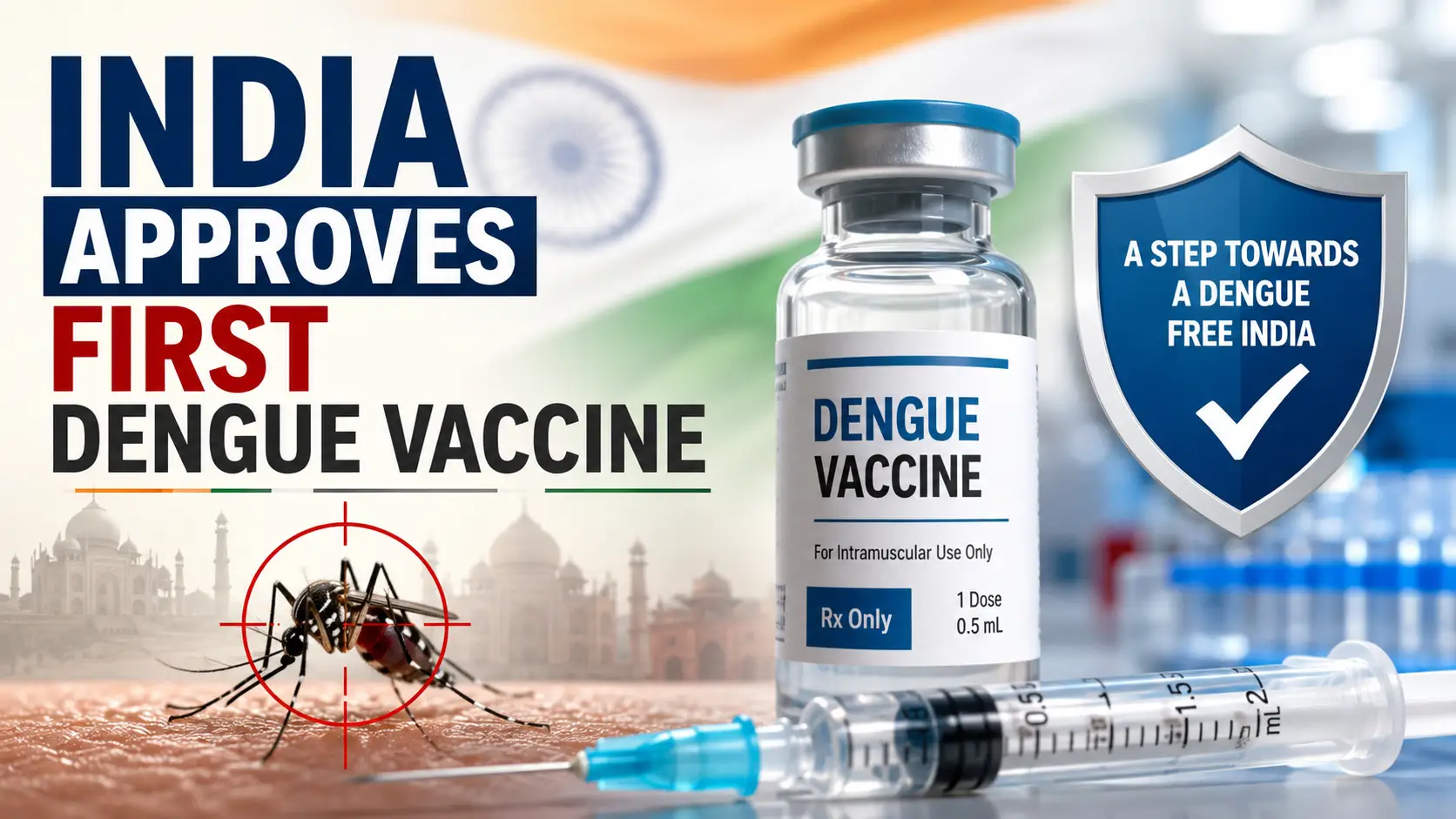
    India Approves First Dengue Vaccine

    India has taken a major step in the fight against dengue by approving its first indigenous dengue vaccine for adults. The approval marks a significant milestone for the country’s healthcare system, offering a new preventive tool against one of the fastest-growing mosquito-borne diseases. Every year, millions of people across India are at risk of dengue, with outbreaks becoming more frequent due to rapid urbanisation, changing weather patterns, and expanding mosquito habitats.

    The approval by the Drug Controller General of India (DCGI) follows years of research, clinical development, and extensive safety evaluations. Public health experts believe the vaccine could play an important role alongside mosquito control programmes and early disease surveillance in reducing the burden of dengue across the country.

    What Makes the Vaccine Significant

    The newly approved vaccine is India’s first domestically developed dengue vaccine. It has been designed to protect against all four known serotypes of the dengue virus—DENV-1, DENV-2, DENV-3, and DENV-4. This broad protection is particularly important because infection with one dengue serotype does not provide long-term immunity against the others.

    A second infection caused by a different serotype can sometimes result in more severe disease, including dengue haemorrhagic fever or dengue shock syndrome. By targeting all four serotypes, the vaccine aims to provide balanced immune protection and reduce the risk of severe illness.

    The vaccine uses a live-attenuated technology, which contains weakened forms of the virus that stimulate the body’s immune system without causing the disease. Similar technology has been successfully used in several vaccines around the world for decades.

    Clinical Trials Show Promising Results

    Before receiving regulatory approval, the vaccine underwent multiple phases of clinical testing across India. Phase III clinical trials included thousands of healthy adult volunteers aged between 18 and 60 years.

    According to the clinical data submitted to Indian regulators, the vaccine generated strong neutralising antibody responses against all four dengue virus serotypes while maintaining a favourable safety profile. Most reported side effects were mild and temporary, including soreness at the injection site, low-grade fever, and fatigue.

    One of the key advantages highlighted during the review process is that the vaccine has demonstrated safety without requiring individuals to undergo pre-vaccination screening for previous dengue infection. Earlier international dengue vaccines faced challenges because some required blood tests before administration, making large-scale vaccination campaigns more complicated. Removing this requirement could simplify public health implementation in India.

    Why Dengue Remains a Major Challenge

    Dengue is transmitted by the Aedes aegypti mosquito, which breeds in clean, stagnant water commonly found around homes, construction sites, and urban environments. The mosquito is active during daylight hours, making prevention difficult in densely populated cities.

    India experiences seasonal dengue outbreaks almost every year, particularly during and after the monsoon season. States such as Kerala, Maharashtra, Tamil Nadu, Karnataka, West Bengal, and Delhi regularly report high numbers of infections. Climate change, increasing temperatures, and irregular rainfall patterns have also extended mosquito breeding seasons in many regions.

    Although many dengue infections remain mild, severe cases can lead to internal bleeding, organ damage, and even death if not treated promptly. There is currently no specific antiviral treatment for dengue, making prevention one of the most effective public health strategies.

    Benefits of Indigenous Manufacturing

    The vaccine has been developed and manufactured within India, reducing dependence on imported products and strengthening domestic vaccine production capacity. Indigenous manufacturing is expected to improve affordability and ensure a more reliable supply during periods of increased demand.

    Lower production costs may also help state governments include the vaccine in targeted immunisation programmes for high-risk populations if future policy recommendations support wider use.

    Local production provides another advantage by allowing faster scale-up during major outbreaks, helping health authorities respond more effectively to sudden increases in dengue cases.

    Vaccination Is Not a Complete Solution

    Health experts emphasise that vaccination alone cannot eliminate dengue. Mosquito control measures will continue to play a critical role in preventing transmission.

    People should continue removing stagnant water from around their homes, covering water storage containers, using mosquito repellents, installing window screens, and wearing protective clothing during mosquito-active hours.

    Public awareness campaigns, rapid diagnosis, and early medical treatment remain essential components of India’s dengue control strategy. Combining vaccination with these preventive measures offers the greatest opportunity to reduce infections and severe disease.

    Future Plans for Children

    The current approval applies only to adults who meet the approved age criteria. Researchers are continuing studies involving children and adolescents to evaluate the vaccine’s safety and effectiveness in younger age groups.

    If these studies produce positive results, health authorities may consider expanding approval in the future. A successful paediatric programme could significantly strengthen India’s long-term dengue prevention strategy because children often experience more severe complications from dengue infection.

    A New Chapter in Dengue Prevention

    The approval of India’s first indigenous dengue vaccine represents a historic achievement for Indian medical research and public health. While it is not a standalone solution, it provides a valuable new layer of protection against a disease that affects millions every year.

    As dengue continues to challenge healthcare systems across tropical and subtropical regions, the combination of vaccination, improved disease surveillance, mosquito control, and public awareness could substantially reduce the impact of future outbreaks. India’s investment in homegrown vaccine research also highlights the country’s growing capability to develop innovative solutions for infectious diseases, paving the way for stronger health security in the years ahead.