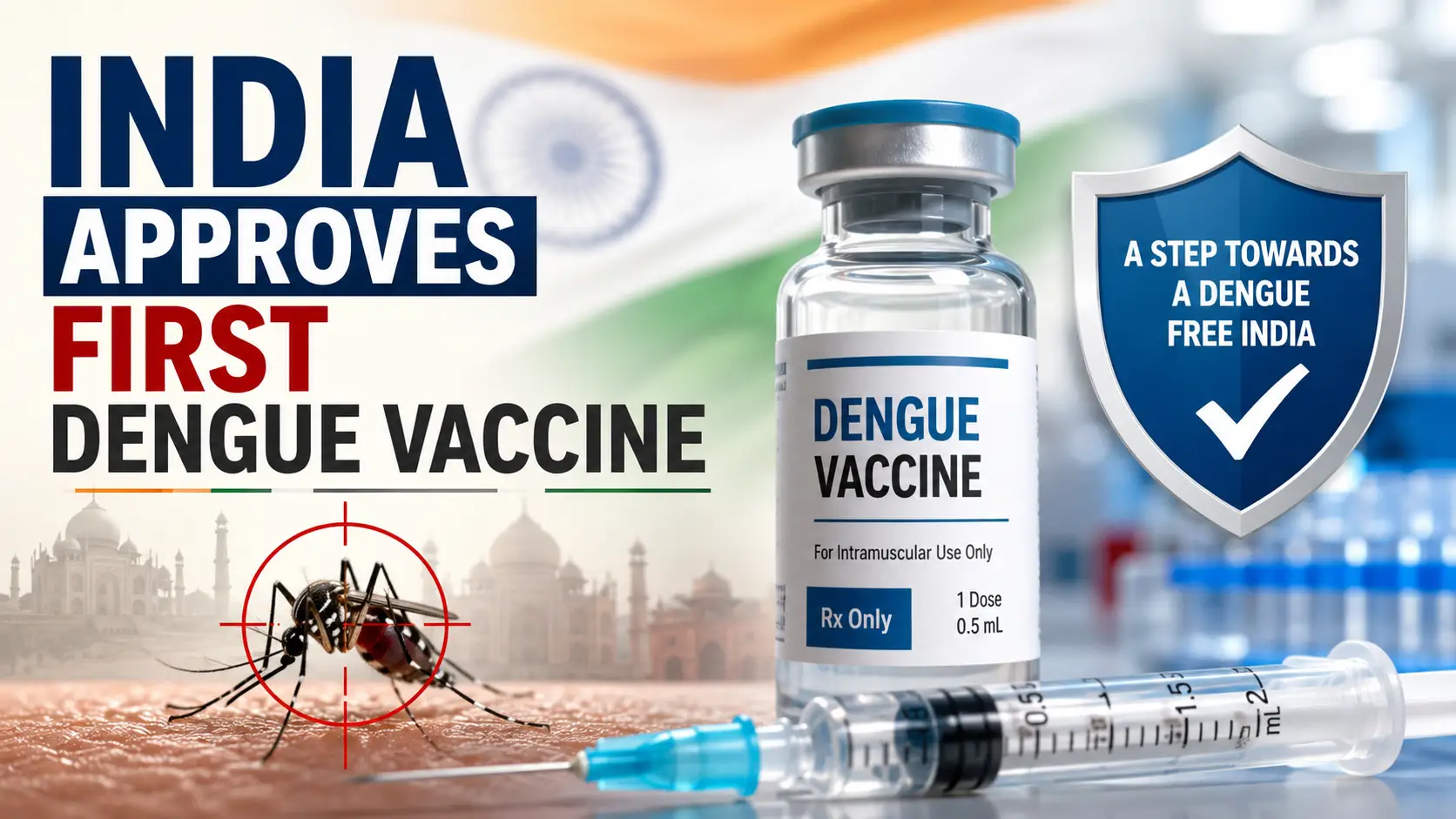
India has taken a major step in the fight against dengue by approving its first indigenous dengue vaccine for adults. The approval marks a significant milestone for the country’s healthcare system, offering a new preventive tool against one of the fastest-growing mosquito-borne diseases. Every year, millions of people across India are at risk of dengue, with outbreaks becoming more frequent due to rapid urbanisation, changing weather patterns, and expanding mosquito habitats.
The approval by the Drug Controller General of India (DCGI) follows years of research, clinical development, and extensive safety evaluations. Public health experts believe the vaccine could play an important role alongside mosquito control programmes and early disease surveillance in reducing the burden of dengue across the country.
What Makes the Vaccine Significant
The newly approved vaccine is India’s first domestically developed dengue vaccine. It has been designed to protect against all four known serotypes of the dengue virus—DENV-1, DENV-2, DENV-3, and DENV-4. This broad protection is particularly important because infection with one dengue serotype does not provide long-term immunity against the others.
A second infection caused by a different serotype can sometimes result in more severe disease, including dengue haemorrhagic fever or dengue shock syndrome. By targeting all four serotypes, the vaccine aims to provide balanced immune protection and reduce the risk of severe illness.
The vaccine uses a live-attenuated technology, which contains weakened forms of the virus that stimulate the body’s immune system without causing the disease. Similar technology has been successfully used in several vaccines around the world for decades.
Clinical Trials Show Promising Results
Before receiving regulatory approval, the vaccine underwent multiple phases of clinical testing across India. Phase III clinical trials included thousands of healthy adult volunteers aged between 18 and 60 years.
According to the clinical data submitted to Indian regulators, the vaccine generated strong neutralising antibody responses against all four dengue virus serotypes while maintaining a favourable safety profile. Most reported side effects were mild and temporary, including soreness at the injection site, low-grade fever, and fatigue.
One of the key advantages highlighted during the review process is that the vaccine has demonstrated safety without requiring individuals to undergo pre-vaccination screening for previous dengue infection. Earlier international dengue vaccines faced challenges because some required blood tests before administration, making large-scale vaccination campaigns more complicated. Removing this requirement could simplify public health implementation in India.
Why Dengue Remains a Major Challenge
Dengue is transmitted by the Aedes aegypti mosquito, which breeds in clean, stagnant water commonly found around homes, construction sites, and urban environments. The mosquito is active during daylight hours, making prevention difficult in densely populated cities.
India experiences seasonal dengue outbreaks almost every year, particularly during and after the monsoon season. States such as Kerala, Maharashtra, Tamil Nadu, Karnataka, West Bengal, and Delhi regularly report high numbers of infections. Climate change, increasing temperatures, and irregular rainfall patterns have also extended mosquito breeding seasons in many regions.
Although many dengue infections remain mild, severe cases can lead to internal bleeding, organ damage, and even death if not treated promptly. There is currently no specific antiviral treatment for dengue, making prevention one of the most effective public health strategies.
Benefits of Indigenous Manufacturing
The vaccine has been developed and manufactured within India, reducing dependence on imported products and strengthening domestic vaccine production capacity. Indigenous manufacturing is expected to improve affordability and ensure a more reliable supply during periods of increased demand.
Lower production costs may also help state governments include the vaccine in targeted immunisation programmes for high-risk populations if future policy recommendations support wider use.
Local production provides another advantage by allowing faster scale-up during major outbreaks, helping health authorities respond more effectively to sudden increases in dengue cases.
Vaccination Is Not a Complete Solution
Health experts emphasise that vaccination alone cannot eliminate dengue. Mosquito control measures will continue to play a critical role in preventing transmission.
People should continue removing stagnant water from around their homes, covering water storage containers, using mosquito repellents, installing window screens, and wearing protective clothing during mosquito-active hours.
Public awareness campaigns, rapid diagnosis, and early medical treatment remain essential components of India’s dengue control strategy. Combining vaccination with these preventive measures offers the greatest opportunity to reduce infections and severe disease.
Future Plans for Children
The current approval applies only to adults who meet the approved age criteria. Researchers are continuing studies involving children and adolescents to evaluate the vaccine’s safety and effectiveness in younger age groups.
If these studies produce positive results, health authorities may consider expanding approval in the future. A successful paediatric programme could significantly strengthen India’s long-term dengue prevention strategy because children often experience more severe complications from dengue infection.
A New Chapter in Dengue Prevention
The approval of India’s first indigenous dengue vaccine represents a historic achievement for Indian medical research and public health. While it is not a standalone solution, it provides a valuable new layer of protection against a disease that affects millions every year.
As dengue continues to challenge healthcare systems across tropical and subtropical regions, the combination of vaccination, improved disease surveillance, mosquito control, and public awareness could substantially reduce the impact of future outbreaks. India’s investment in homegrown vaccine research also highlights the country’s growing capability to develop innovative solutions for infectious diseases, paving the way for stronger health security in the years ahead.
Leave a Reply